 Alessandro Romano · ·
Padel is played in doubles inside a 20 × 10 m glass-and-mesh enclosure, with a felt ball and a perforated racket, and the walls are in play. Pickleball is played on an open 13.41 × 6.10 m court with a solid paddle and a light plastic ball, and its key feature is the non-volley zone, "the kitchen", next to the net. Padel is faster and more physical, built on lobs and rebounds; pickleball is gentler, built on touch and reflexes. For a club, pickleball costs little to start, while padel needs dedicated courts but usually earns more per court.
Both are easy to start and both are played mostly in doubles. Here is how they differ, for players choosing a sport and for venues choosing what to build.
Two different origins
Pickleball was invented in 1965 on Bainbridge Island, near Seattle, by three fathers, Joel Pritchard, Bill Bell and Barney McCallum, who improvised a game for their families with table tennis paddles, a perforated plastic ball and a badminton court. It grew steadily in the United States and has boomed there over the last decade.
Padel was born in 1969 in Acapulco, Mexico, when Enrique Corcuera built walls around a court at his home. It reached Spain in the 1970s and Argentina soon after, and today it is a major sport across Spain, Latin America, Italy, Sweden, the Middle East and a growing number of countries in Europe and beyond.
The rules side by side
| Rule | Padel | Pickleball |
|---|---|---|
| Court | 20 × 10 m, enclosed by glass and mesh walls | 13.41 × 6.10 m (44 × 20 ft), open |
| Net height at the centre | 88 cm | 86.4 cm (34 in) |
| Walls | In play after the ball bounces | None |
| Racket | Solid and perforated, with no strings and a foam core | A solid paddle with a smooth face and no holes |
| Ball | Pressurised and felt-covered, like a slightly softer tennis ball | A light plastic ball with holes |
| Serve | Underhand, after bouncing the ball, hit at or below the waist, diagonally | Underhand, diagonally, landing beyond the non-volley zone |
| Special zone | None | A 7 ft (2.13 m) non-volley zone, "the kitchen", on each side of the net |
| Bounce rule | The ball may be volleyed except on the return of serve | The two-bounce rule: the serve and the return must each bounce before being hit |
| Scoring | Like tennis (15, 30, 40, games and sets). At deuce, the FIP rules in force since 2026 let each event choose advantage, a single Golden Point, or the new Star Point used on the professional tours | Games usually to 11, won by 2; in the traditional format only the serving side scores |
| Usual format | Doubles | Doubles and singles |
How each one plays
In padel, the walls change everything. A ball that beats you is not lost: you let it come off the back glass and play it on the rebound. Points are long and built on positioning. The team that takes the net usually wins the point, so much of the game is about lobbing opponents back and fighting for the net again. Smashes, bandejas (a controlled overhead) and shots played off the glass make it spectacular to watch.
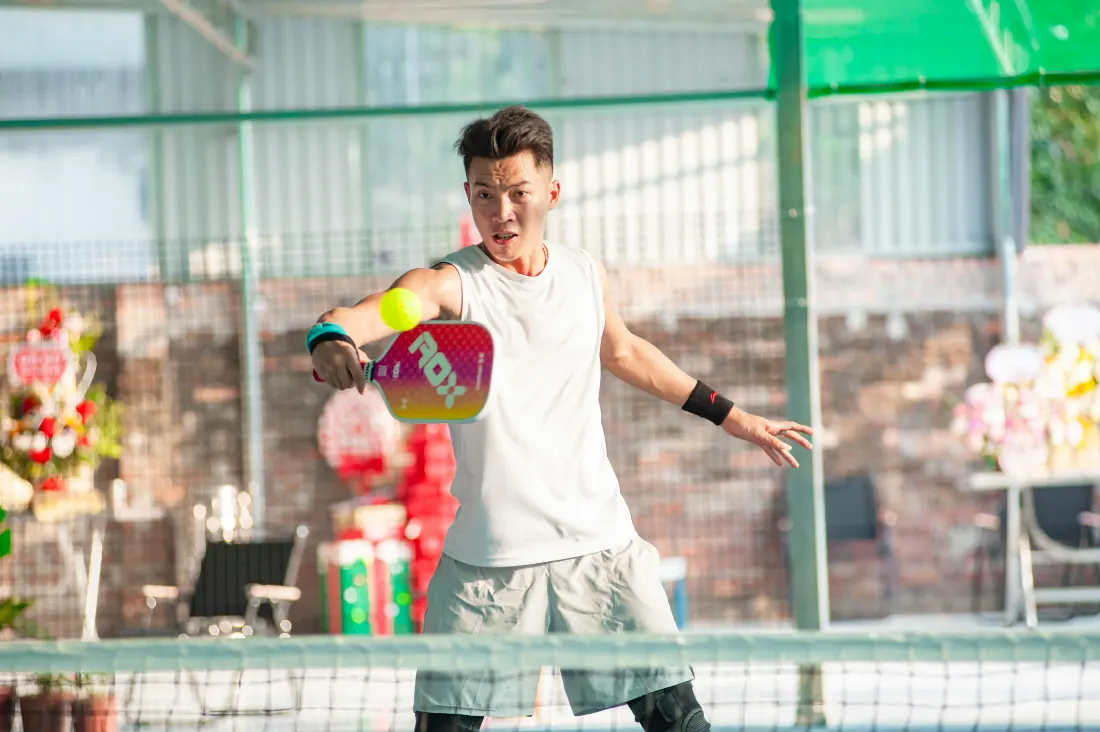
In pickleball, the kitchen shapes the game. You cannot volley while standing in the non-volley zone, so players exchange soft "dinks" that drop into the kitchen, waiting for a ball high enough to attack. Rallies alternate between patient touch and very fast exchanges at the net. Reflexes and placement matter more than power.
The first session
Both are known for being quick to learn, but they feel different in the first hour:
- Pickleball is gentle on the body and the court is small. Newcomers rally within minutes and often play a real game in their first session. The rules about the kitchen and the two-bounce rule take a little explaining.
- Padel feels instantly fun because the walls keep the ball in play. Learning to read the rebounds off the glass takes longer, and the game is more physical: more running, more overheads.
Former tennis players adapt quickly to both, though they need to shorten their swing in padel and soften it in pickleball.
What a club needs to offer each sport
Pickleball is light to set up. Lines can be painted on an existing tennis court or a sports hall, and portable nets cost little. One tennis court can host up to four pickleball courts. The investment is small, so it is easy to test demand.
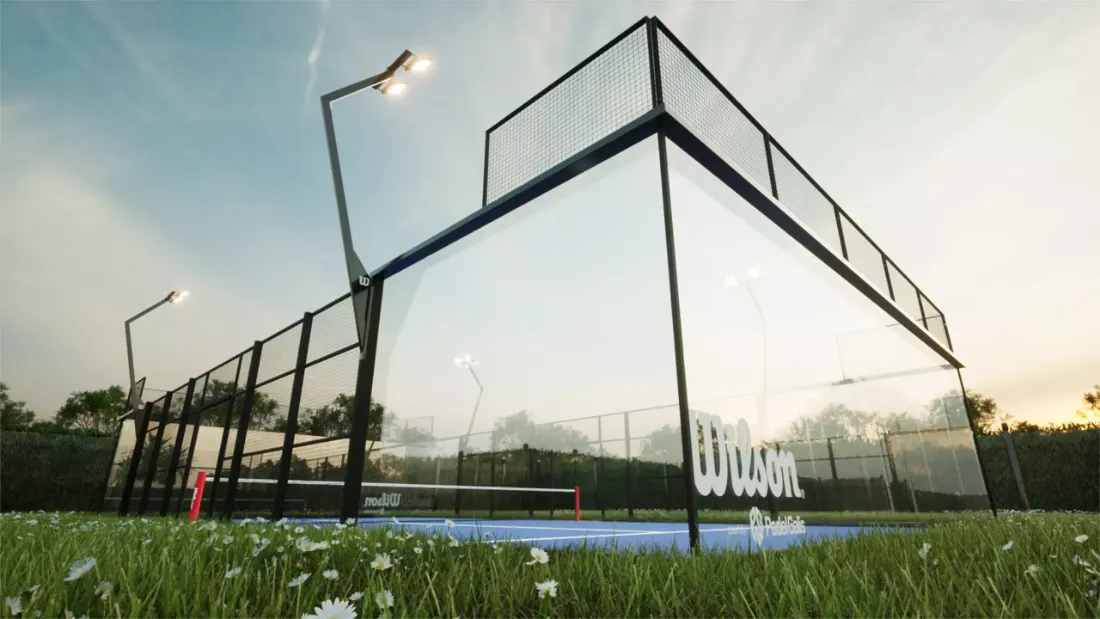
Padel requires dedicated courts (20 × 10 m, see our padel court dimensions guide) with glass walls, a structure and, ideally, a roof or canopy. The investment is significantly larger, but where padel is established, courts fill well and players pay more per hour, so the revenue per court is usually higher.
For many clubs, the question is not "padel or pickleball?" but "in what order?". A club can test pickleball with a few weekly sessions on a tennis court while planning padel courts, then decide from the numbers.
Which one is for you?
Choose padel if you like a fast, physical game, enjoy playing with walls and angles, have a padel club nearby, and want a sport with a strong competitive scene and social matches every evening.
Choose pickleball if you want something gentle on the joints, enjoy touch and reflexes over power, like to play with mixed ages and abilities, and have courts or a hall nearby that host it.
Plenty of players do both. The skills overlap enough to help each other, and different enough to keep both interesting.
Offer both sports with PLAI
Pay nothing. Get everything. PLAI is 100% free to run your venue: no subscription, no contract, no limits. It handles several sports in one venue: set up padel courts and pickleball courts as their own spaces, with their own prices and opening hours. Players and members book and pay their share in the app, join open games and tournaments, and record ranked results that keep their level up to date in each sport. Your analytics can be filtered by sport, so you can see how each one fills before deciding where to invest. See PLAI Business.
FAQ
Is padel or pickleball easier for beginners?
Pickleball is usually quicker to play a real game in, because the court is small and the pace gentle. Padel feels fun from the first hour, but reading the rebounds off the glass takes longer.
Can you play padel on a pickleball court?
No. Padel needs a 20 × 10 m court enclosed by walls; pickleball is played on an open 13.41 × 6.10 m court.
Do padel and pickleball use the same ball?
No. Padel uses a pressurised felt ball close to a tennis ball (see padel and tennis balls compared); pickleball uses a light plastic ball with holes.
Which is cheaper for a club to add?
Pickleball. Lines and portable nets on an existing court cost little, while padel needs glass courts and a structure.
Is padel scored like tennis?
Yes, with 15, 30, 40, games and sets. What happens at deuce depends on the event: advantage, Golden Point or Star Point.
Related reading: What is padel? History, origins and tips.